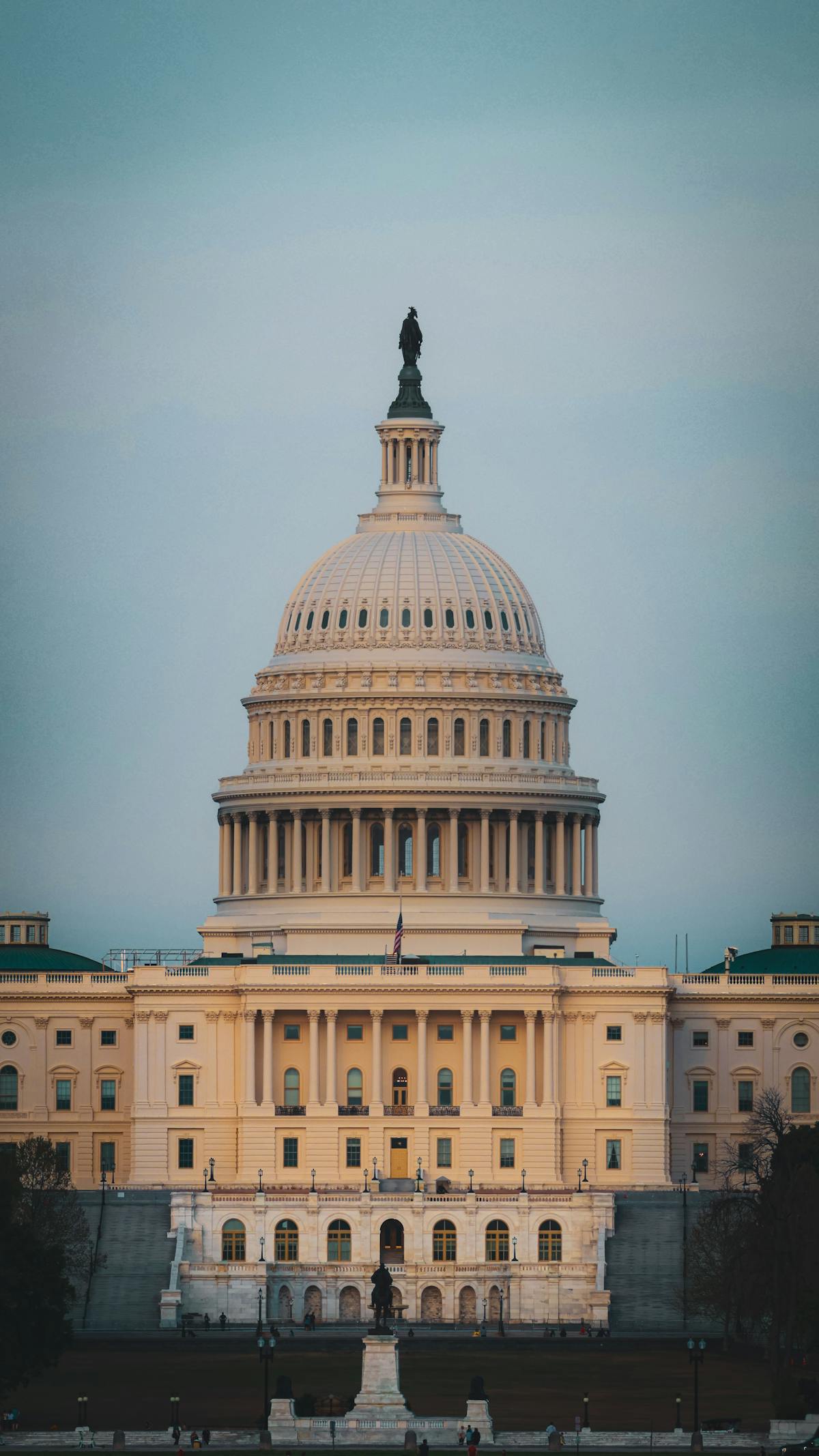
On March 20, 2026, the White House published a National Policy Framework for Artificial Intelligence, the first document of its kind from the federal government to outline how Congress should approach AI governance. The White House AI policy framework 2026 is not binding, does not create new regulations, and does not direct agencies to take specific enforcement actions. What it does is establish a clear set of priorities: keep AI development in the hands of companies, block states from creating their own oversight structures, and defer to courts and existing regulators to handle any problems that emerge.
That approach has a philosophical coherence to it. It also has a policy record worth examining before accepting the framing at face value.
What the White House AI Policy Framework 2026 Actually Contains
The framework was published on March 20 and is available in full on the White House website. Its stated objectives include child safety, consumer protection, national security, intellectual property rights, workforce development, and managing the energy costs of AI data centers. These are real concerns and several are addressed with genuine specificity.
The document does not propose a new federal AI regulator, consistent with the Trump administration’s broader deregulatory posture. Instead, it recommends that existing agencies handle AI-related concerns within their current mandates. The FTC, EEOC, and sector-specific regulators would address AI issues as extensions of their existing authority, according to WilmerHale’s analysis of the framework. The RAISE Act, which took effect one day before the framework’s release, establishes transparency, compliance, safety, and reporting requirements for developers of large frontier AI models. That is binding federal action. The framework’s additional recommendations remain advisory.
The most consequential recommendation concerns preemption. The framework explicitly supports broad federal preemption of state AI laws that it characterizes as imposing undue burdens on innovation. States would retain authority to enforce laws of general applicability, primarily child protection, fraud prevention, and consumer safety. But targeted state-level AI regulation, the kind that would require companies to disclose when AI systems are used to make employment decisions, or mandate human review of automated benefits denials, would be blocked under a federal standard that, as of now, does not exist.
Why Federal Preemption of State AI Laws Is the Document’s Real Substance
Describing preemption as a technical matter of regulatory coherence understates what it does in practice. Several states have moved to regulate specific high-stakes AI applications. Indiana, Utah, and Washington have enacted laws governing AI in health insurance. Tennessee and Delaware have passed laws prohibiting AI systems from representing themselves as qualified mental health professionals or licensed healthcare workers. Over 600 AI bills were introduced in state legislatures in the first quarter of 2026 alone, according to Alston and Bird’s April 2026 AI Quarterly.
The framework’s preemption recommendation, if enacted by Congress, would supersede that state-level activity in favor of a single federal standard. That standard does not yet exist, and the framework is explicit that it does not itself create new requirements. The immediate practical effect would be to halt state enforcement activity while waiting for federal legislation that could take years to materialize, or that could arrive in a form that provides less protection than what states were constructing independently.
This is not a hypothetical risk pattern. Federal preemption was used in financial services to override state consumer lending protections in the years before the 2008 financial crisis. The argument for preemption was regulatory coherence. The effect was to remove oversight that states had developed in response to local market conditions and specific industry conduct. Legal analysts at Consumer Finance Monitor have noted this parallel directly.
Federal enforcement of AI rules is already happening under existing authority. The EEOC has opened investigations into AI hiring systems under existing civil rights law. What is new is the speed and scale at which these systems are making consequential decisions about employment, healthcare, credit, and housing. Whether existing regulatory mandates are adequate to match that pace is the open empirical question. The framework answers that they are, without making a detailed case for why.

Why the Self-Regulation Track Record Is the Relevant Baseline
The framework’s reliance on industry-led standards and existing enforcement reflects a genuine philosophical position: that innovation is better served by minimal advance regulation, with problems addressed after they become visible. That is a defensible view. It also has an empirical record in technology that is available for review.
Social media platforms operated without meaningful federal oversight for more than a decade on this same logic. The systems they built optimized for the metrics they were designed to maximize, which turned out to produce documented harms at scale. The regulatory response arrived years after the harms were well established and still has not produced a coherent national framework. The AI sector has a longer runway and higher stakes for the same bet.
Stanford’s 2026 AI Index found that 74 percent of AI’s productivity gains have gone to 20 percent of companies, while entry-level employment fell 20 percent. The companies capturing the majority of those gains are largely the same companies whose self-regulatory commitments are being trusted under this framework. The incentive structure for responsible behavior in the absence of binding rules is not obvious.
The framework does include genuinely useful provisions. Its child safety recommendations are specific and, if enacted, would provide more consistent protection than the current state-by-state patchwork. Its intellectual property guidance, which defers copyright questions to the courts rather than legislating around fair use, reflects realistic humility about what Congress can usefully decide. These are substantive inclusions, not window dressing.
What the US-EU Divergence Creates in Practice
The United States is not setting AI policy in isolation. The EU’s AI Act, with compliance deadlines beginning in August 2026, creates binding requirements for high-risk AI systems with penalties reaching 7 percent of global annual revenue. Multinational companies operating in both jurisdictions face a compliance split: rigorous binding rules for EU operations, voluntary standards for US operations.
That divergence creates predictable incentives. Companies will design their AI governance programs to meet the binding requirements, and their US compliance activity will converge toward whatever is minimally necessary under a voluntary framework. The investment in compliance infrastructure flows toward the jurisdiction where the consequences of non-compliance are real. This dynamic is already visible in how large technology companies are structuring their policy and compliance teams in 2026.
The White House framework makes one correct diagnosis: a fragmented state-by-state regulatory environment is genuinely worse than a coherent national standard, for both innovation and consumer protection. The case for federal action is real. The version on offer, however, removes existing state enforcement mechanisms before it creates new federal protections, and trusts industry actors with clear financial incentives against robust oversight to fill the gap in the interim.
That is not a neutral policy design. It is a set of choices about who bears the risk when AI systems produce harmful outcomes. In 2026, with AI making consequential decisions about employment, healthcare, credit, and housing at greater scale than any prior year, those choices will have visible consequences. Whether the federal standard the framework promises arrives in time to shape them is the question worth tracking.
This article contains analysis based on publicly available policy documents and legal commentary. The White House National Policy Framework for Artificial Intelligence was released March 20, 2026. State legislation figures are from Alston and Bird’s April 2026 AI Quarterly. Legal analysis draws on WilmerHale and Consumer Finance Monitor reviews of the framework, all linked above.